

A Postcard from Chetham's Library
Dear Magician,

Manchester. Showery weather, a few raindrops dimpling the skin of the fountain water like rising fish. I’m early. I stand waiting, leaning against a tree. The tree has leaves like an apple, but it’s very tall, & the bark of the trunk is rough & vertically fissured, like finer pine-bark.1 I’m standing with one boot crossed over the other & suddenly this pose sparks memory— Hilliard’s miniature, that youth amongst the roses.2 A woman is sitting on a stone cube in front of me. As I turn my attention to her I can feel that she’s uneasy with someone (me) standing behind her, but I’m sheltering from the rain & don’t want to move. A little energetic push & pull. (Note this woman: she comes back later in the story.)
I love the way a shared purpose filters individuals from a crowd. It’s a phenomenon I often re-notice in airports: the way people congregate out of the mass to their own gate like filings to a magnet & you see, oh, there are the London people. (If you were feeling so homesick you just needed to hear your own accent & see your own people’s faces for a minute, you could go to the airport & hang around the gate of a departing flight home…)
Anyway, now the gravitational weight of Chetham’s Library3 draws the book people, the history people, the library people out of the city of Manchester, one by one, two by two, until there are fifteen or so of us standing by the gate, which is barred. Nobody can just wander in— it’s like a border in that regard, with a guard in a box—though some Library folk come & go with (it seems to me) pleasure at their ability to pass through the gate at will. (The specialness of that feeling, when it’s you; the power of belonging to a place, hidden doors opening before you.)
I’ve no idea what to expect; Jennifer Reid has booked the tour for me, as a gift. I look at the sandwich board, write a few notes in my book.
I write Chethams: the oldest public library in the English-speaking world (1653)4
No solitude = no wizarding
Too much solitude = no input / inspiration
…I’m trying to work out why the current of magic has gone underground lately, difficult to tap into…
I look up from my book: the tour guide has appeared. He’s a silver-haired man, handsome in a good working-class way, accompanied by a silent & serious woman guide. He’s wearing a pebble around his neck, carved with a symbol I can’t decipher. He says his phone isn’t working, so we’re were going to do things the old-fashioned way, by names. As he slips his phone back into his pocket I see, on the back of his phone case, the three drops of Taliesin: ah. A Druid, then. As he stands giving his opening spiel (“If you enjoyed the tour, my name’s Paul; if you didn’t, it’s Andrew…”) I study the side of his face, the cropped silver hair at his temple where one small lock has gone wayward, pointing askew from the nap. He has, I think, a Lancy accent, presumably Mancunian, though I couldn’t swear to it. The library draws whom it needs out of the city on a larger scale too— of which more later.
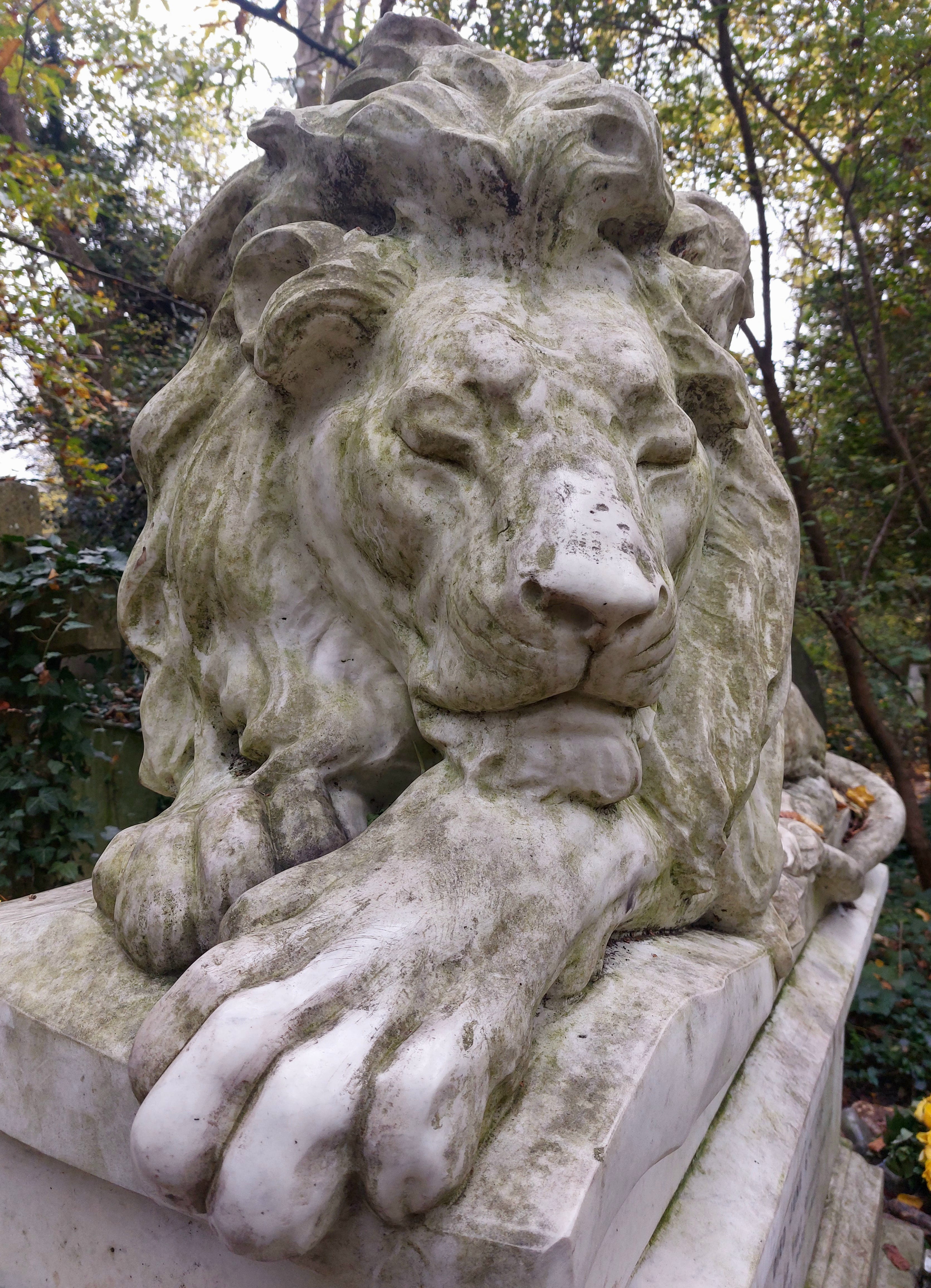
Then we tell our names. As I spell mine out I have an entirely novel sensation: with a tiny shock I realise that for the first time in my life I’m in a place where my name mightn’t be unusual— a place where other people might conceivably have the same name as me. (My Great-Great-Grandfather James Whinray came from around here, near the Yorkshire / Lancashire border.) The Druid guide hands me a fluorescent lanyard & tells the group “No photos allowed between the gate & the library.” (Because it’s a school.)
Then through the turnstile one by one & in. Admittance! A garden with square-cut hedges & a single tree in the middle of each— very Renaissance, making mathematical order out of nature. There are a few children around, playing, shouting, running. (Imagine going to school here! But this is why the English don’t notice oldness like I do— it’s the water they swim in their whole lives long.)
Aside from the Cathedral, the Library is the oldest building in Manchester. Everything is built of stone here in the North— a cold material. As we stand outside the library door, the guide shows us the exterior stones & tells us how somebody misguidedly washed the building in the 70s (the 1970s, presumably) so that now you can see the red of the sandstone instead of, as formerly, the centuries-worth of picturesque grime.5 I’m hungry to look at everything, to notice & remember. I’m paying particular attention to the stone cobbles underfoot, round stones that the guide says came out of the river. (It’s my habit to look underfoot, maybe because the ground is a thing I’m constantly touching, when so much else is forbidden or impossible to touch. Also, the ground is close: a visible distance.) Anyway, I’m looking at the riverstone cobbles, which are quite variable in colour, red, grey, ochre, a few dark grey with a white stripe through them, all worn smooth by centuries of footfall. Very different from the yellow clay flints of London or the grey flints of the Downs— but, like the flints, many of these stones are almost perfectly round, which is very pleasing.6
“It’s dark in there, & it’s not the present— it’s not 2026 inside the Library!” says the guide. Then the door— it’s just what you imagine, a very heavy black oaken door laden with ironmongery, set into an arched stone doorway7— this door is opened & we are admitted to the Library. Indeed, we find ourselves in a darkened corridor. I note the way the masons’ tools have left combing patterns in the wall stones, where the side-light from the windows hits the stone faces; looking back at the outer door, I see the cracks between planks letting chinks of daylight through; then the windows, made up of tiny diamond-shaped panes of glass— delicate ancient glass, with bubbles in it.
This glass is so evidently handmade, its preciousness evident in the smallness of the units that make up the whole, & through these characterful windows I can see an interior courtyard made of red stone, softened & colour-blurred like paint in the rain. The guide says that when the building was first made there was no glass in these windows, they were open to the elements. (I’d felt the weather of Manchester, & this was Summer!) It was something of a fortress, says the guide. The monks were self-sufficient, & because they had stores of food & no windows, that meant mice. How did they deal with the mice? Well, they had cats. He opens his folder & reads us a bit of Pangur Bán,8 then shows us, with great reverence, an ancient catflap— a round hole in the door. I did not then understand that this is possibly the oldest catflap in the the world. The oldest parts of the building are from the 1420s: “Before Leonardo was born, before Columbus sailed to the New World, these stones were laid.”
I had been noticing in London how ancient cities are about themselves in a way modern cities aren’t. There’s an accretion of culture, complexifying like an ecosystem, expressed in phenomena like how in London charity shops you will find many many books about arcane aspects of London history & culture. The hidden rivers of London, or a particular corner of London, or trees of London… Or the way as you walk through London the London songs spark up on the mind’s jukebox. Waterloo Sunset… Sweet Thames Flow Softly… Guns of Brixton… This is meta-London, the London of London. Many novelists (i.e. Alan Moore, China Miéville, Neil Gaiman) hold this Other London, this meta-London, to be a real place, a parallel world. Just so, one can extrapolate meta-Manchester, overlaid & interlaid with Manchester-the-now. The Library stands on a prime spot, one that must have been a spot since time immemorial: a high bit of land at the confluence of two rivers, the Irwell & the Irk.9 (Rivers & waterways are central to the history of Lancashire, as the resource, the power-source, that drove the factories & mills.)
The guide leads us through the corridors & around a few corners, little rats after the piper, to the Baronial Hall. In these huge ancient vaulted rooms I always notice the beams, those mighty oaks of old, their growth-forms made immortal in death. While the guide is talking about Oliver Cromwell (some of the army’s weapons are mounted on the walls) & Shakespeare,10 I’m looking at a little fire nook off to the side, with an entrance too low to step under: even an olden days shorty would have to stoop.
Coming from a geologically volatile place where most buildings are made of wood (out of necessity as well as availability— wood bends) the slumbrous quietude of earth necessary for tall stone (& / or brick) buildings to stand through the centuries is literally foreign to me. One big earthquake & that’d fall on your head! That’s what I thought the first time I stood in front of the mighty facade of King’s Cross. That’s what I thought as I wandered under the roofless walls of Whalley Abbey. This earth is not my earth. And to be INSIDE stone, to step inside a stone building, let alone to live in one? That has a feeling too, a skin-felt coldness, subterranean, like being in a cave, as if the earth lifted the edge of her blanket & tucked you under it. Hearth fire was what made it possible to live inside stone, yet now fire is forbidden. (Seeing the drystone walls of Yorkshire for the first time, that ancient script written & rewritten on the land in human hand & rock, I thought— stone of my heart! I thought, this is why I love stone! I thought, if I grew up here, that’s what I would do— make those! I kissed the walls on their stone faces! But I digress...)
We’re inside the Baronial Hall, & the guide is pointing to Oliver Cromwell’s weapons— pikelike things— but I’m looking into the inglenook, the little firehole at the side. (My contrarianism makes me want to see things other than what the guide wants me to see, other than what other people are seeing. Have I ever been on a tour before? Uncertain. But the feeling is one I often have in England: so close & yet so far: the thing is right there, but I’m not really free to go deep.) The paving stones are laid tesselating in a pattern, hexagon / squares / triangles. There are dark benches with carved animal-face knobs on the armrests, polished bright by rubbing, like the smooth marble paw of the Abney Park lion.11 It’s easy to imagine hugging the fire as snow falls thick outside. The guide reckons that the curved roof over the banqueting platform— something like a photographer’s seamless studio floor, upside down— is designed to redirect the sootfall onto the lesser peasants in the middle of the hall rather than the feasting nobles on the raised dais.
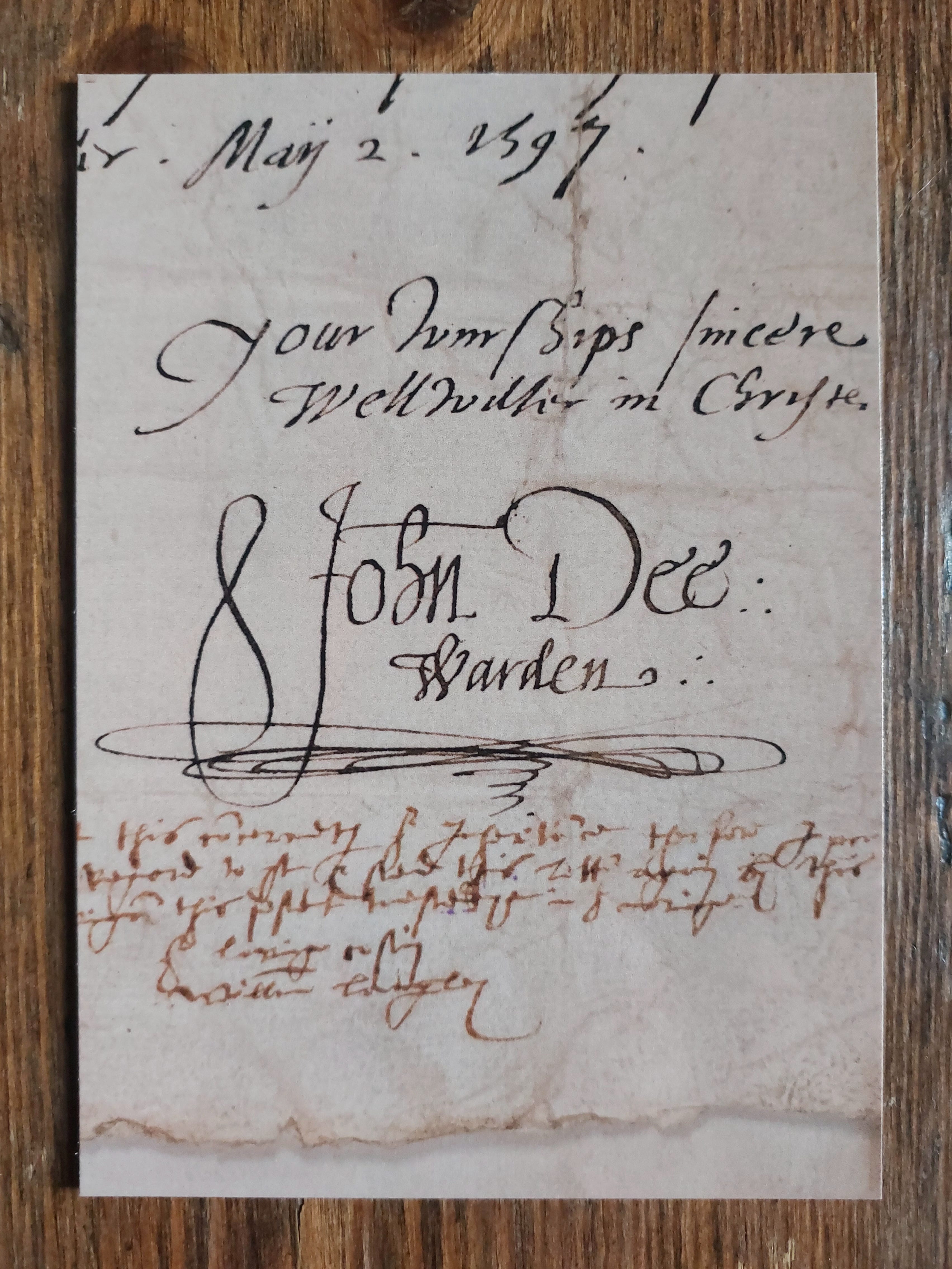
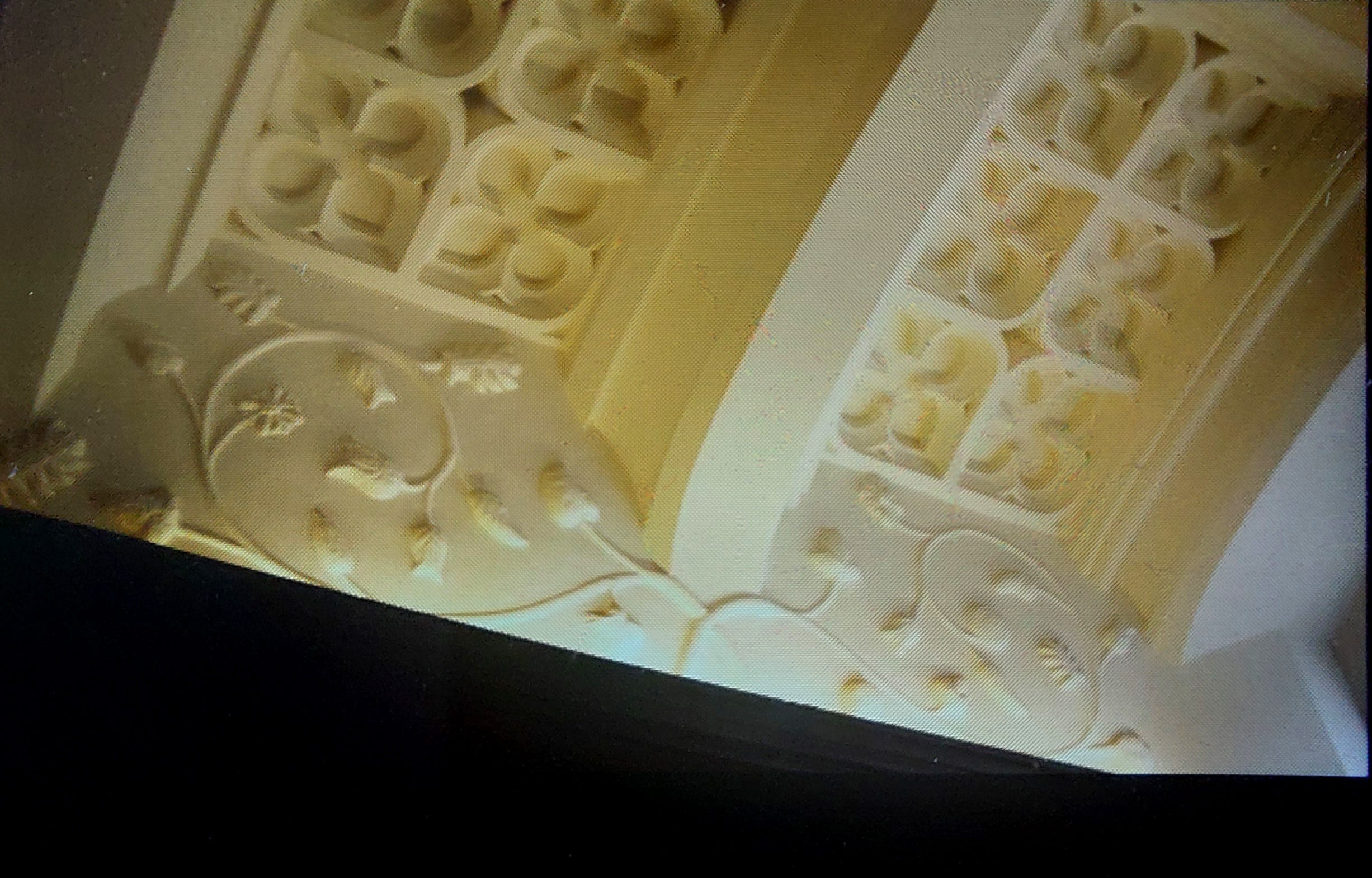
Thence to the Audit Room. There are teasels laid on the chairs we’re forbidden to sit in, the most ancient & delicate ones, wooden backs carved into dragons & plants, seats polished by hundreds of bums to a rich golden glow. Talk of John Dee, one-time warden of the College; the green man carved over the fireplace (important to pagans, says the Druid guide); & the Devil’s supposed hoofprint burnt into the table by the door. But I’m gazing up at the gorgeous moulded plasterwork around the top of the walls. I know what it is because Jenn was talking about this traditional style the day before, as a thing she would like in her own cottage, above the ‘fire’ (see aforementioned forbiddenness of fires in the modern home: yet a fire still remembers what it was). The light shining from the window onto the perfect warm-white plasterwork— flowers, leaves, & vines— against the almost-black oak of the beams is visually delicious, sublime, even.
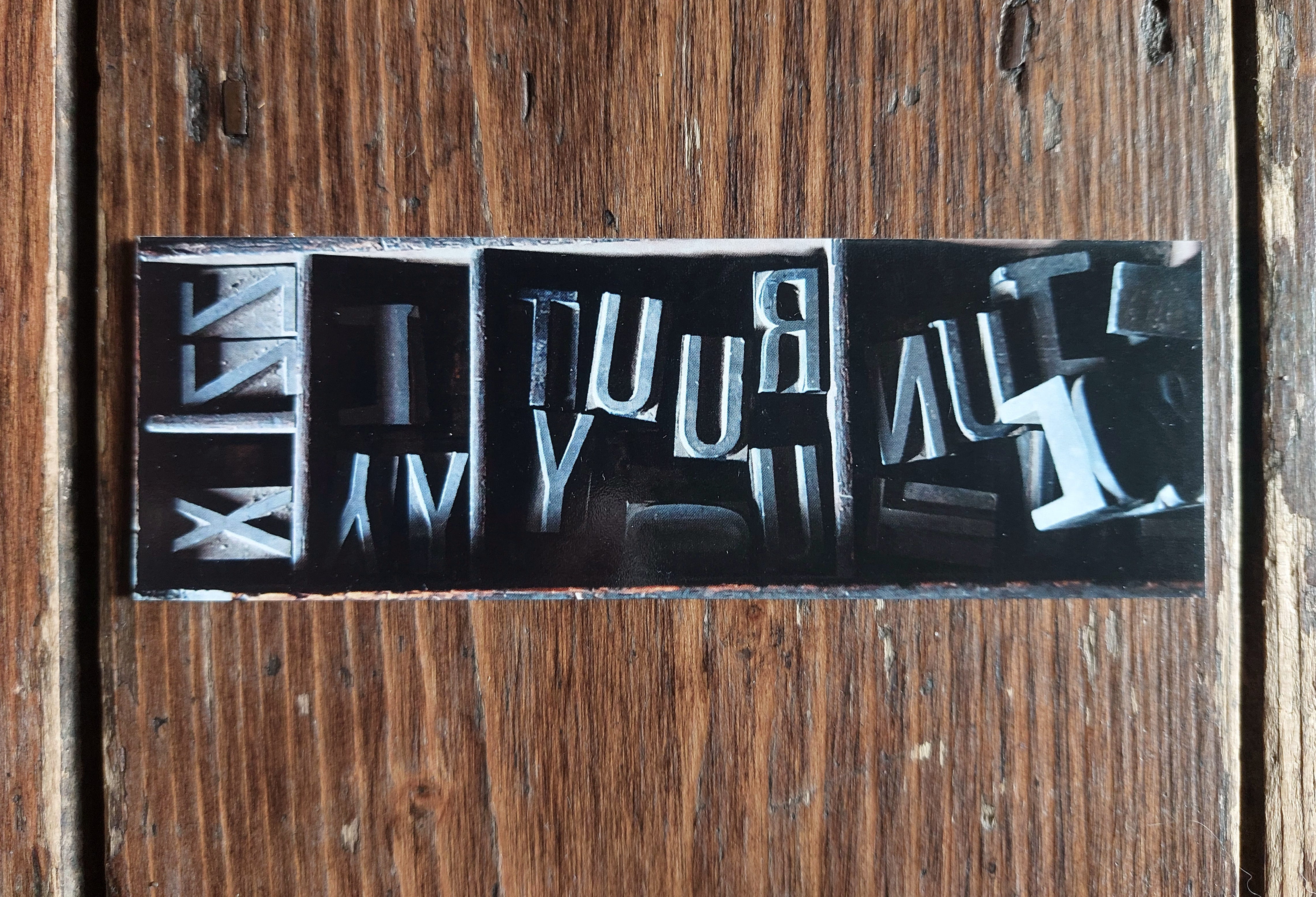
Finally, the treasure is revealed unto us. Up the stairs to the Library, where we’re invited to breathe in the smell of old books. (No! I shan’t! Don’t tell me what to smell!) I go over to stand beside the wooden printing press. It’s magical to me, because I know it’s a tool of work of Jennifer’s mentor, Graham Moss. The shadow guide (the silent woman who says nothing for the whole tour, except when she reminds the Druid guide that he’s missed out one of the ‘catflaps’, thus denying us, the tourists, the catflap trifecta) comes close to me, I think because the type slugs are the kind of small thing that’s easy to pocket.12 (As if I would!) They’re in a modern font though, not sure what, but roundy, more horizontal than vertical.
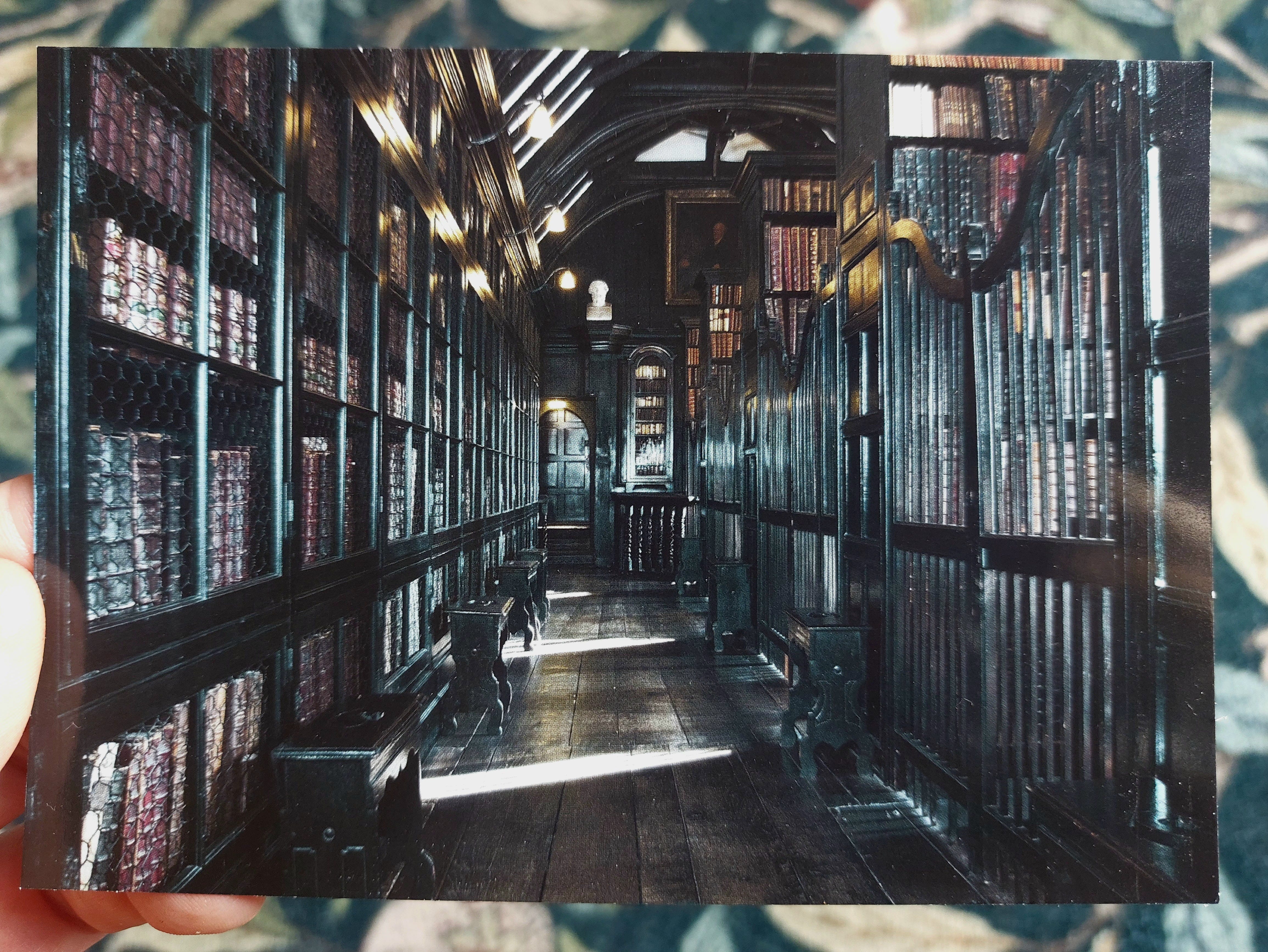
It’s a funny feeling to be in a library yet forbidden to touch any of the books. I read some titles through the chicken wire. Are these books interesting? Do I want to read them? I can’t tell. The library is theoretically public (it says so on the sandwich board) but the books are locked away. Precious old leather spines, gilded, faded, decrepit, repaired, sorted by topic, the topics gilded onto the partition-wood; & by letter, the letters gilded in upper & lower case. That beautiful palette of old books, maroon, green, brown, blue, lit by tasteful lights; then the graphic black & white, the chunky still-visibly-tree-formed black beams of the Tudor ceiling with limewash between, fat ink lines on a page. The guide tells us that the books are continually taken off the shelf, dusted, & reshelved, in an infinite rotation. He says they’re shelved by a system naming the book’s place on a particular shelf. He shows us a stool with an S-shape carved into the top, easily liftable by both left- & right-handers.
(Jenn tells me later that this is where she spent a lot of her time, deep in the ballad archive. “Kathy would lock me into one of those little cubicles like— read everything! Then when a tour came through, they’d get a fright when they peeked in, me in there like a library monster...”13
The last room is the Reading Room. We are deep inside the snail shell of the Library now. There is a portrait of old Humphrey Chetham on the wall, hung under an elaborately painted mural dense with mysterious symbology. There is also a case of chained-up books. I’m near the back of the pack this time so I don’t really get to see the books or hear about why they’re chained up— presumably they’re either dangerous or precious or both. It reminds me of all the magical living books in stories, books that change form, or reveal new words depending on the reader. The Dictionary that falls into the Hobgoblin’s hat, & all the words become tiny crawling beasts… Then the guide surprises me. He says, “That window seat was where Marx & Engels sat to work together.”
Remember the woman at the start of the story, sitting on the block of stone? Here I notice her again: she gets into the reading window & her friend gets in opposite her. They are trying to take a selfie. (The friend has bleached hair, scraped back.) I say give me the phone, I’ll take a photo of you two! As I’m doing it, different angles, one, two, three for luck, a man comes up to us & says Karl Marx would be turning in his grave if he could see what’s been made of his theories. Not a Marxist, then! We ignore him & he goes away.
“Am I Marx, or Engels?” says the woman.
I say “Well, are you rich or poor?”
She tells me she’s from Angel Meadow. “Where’s that— what does that mean?” I say. “I’ve never been to Manchester before.”
She tells me it’s just over there— it was where Engels lived— & it was a slum.
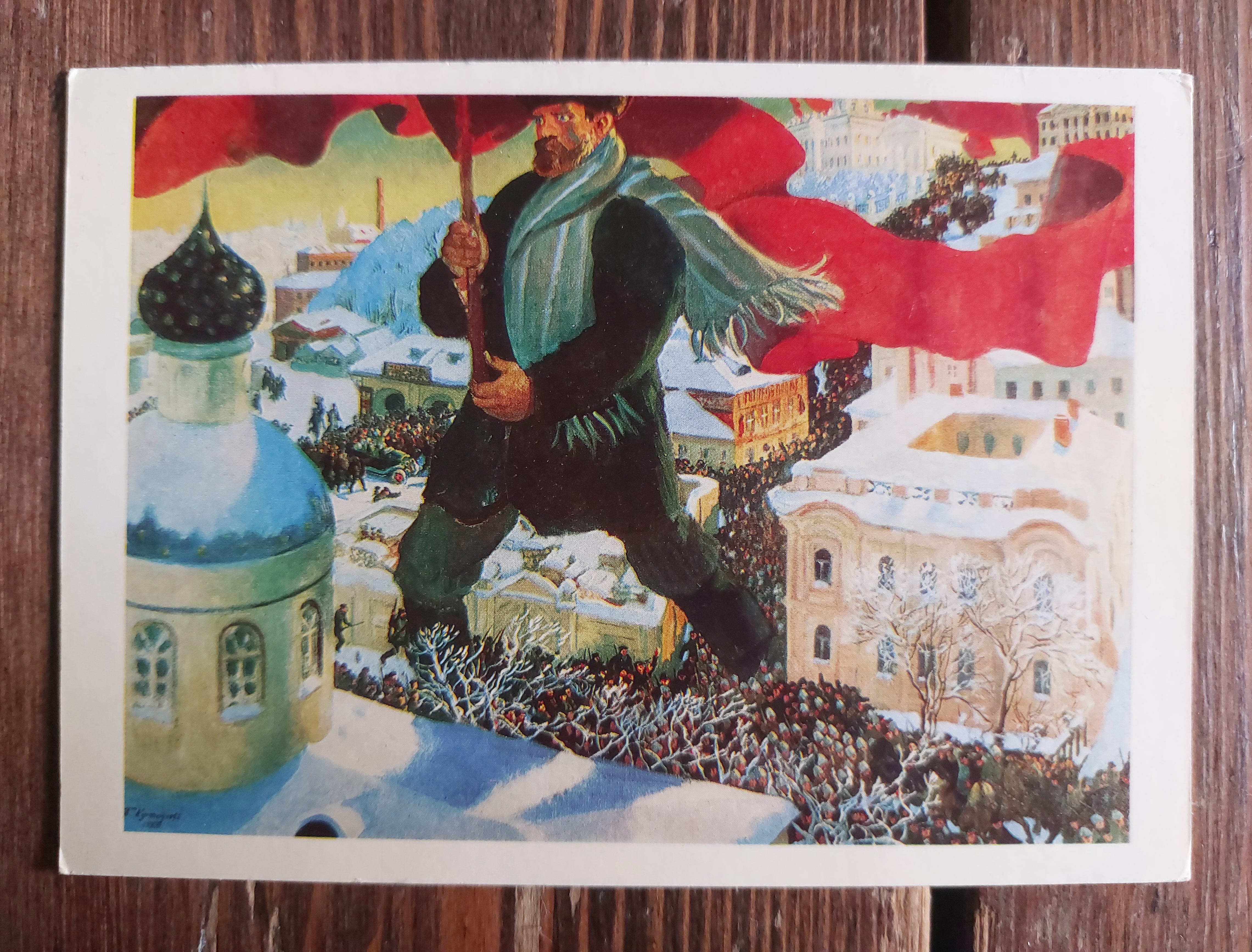
Afterwards everyone disperses but I’m lingering around in the Reading Room, looking at postcards. I don’t want to leave— I want to talk to the guide alone. After he rings up my postcards I ask him if he knows Jenn (he doesn't). Then a Druidcoded question: “Do you sing?”
He says that when he’s alone in the library he likes to sing, yes. (Imagine! Alone in the library, late at night, singing to all the ghosts, all the ghosts of ghosts!)
The tour is over. We thread through the passageways, exit through the big door, retrace our steps to the gate, then push out through the turnstile one by one. I’m talking to the Angel Meadow women some more but then it starts to rain, really rain, & everyone vanishes. I run for the only bit of shelter in sight, a stone doorway. If I press myself hard to the wall, only the tips of my boots are in the rain. A certain scent, revived by the rain: there’s a human shit in the far corner.
Jenn’s meeting should be wrapping up by now, so when the downpour eases I run through the wet streets to find her at the Royal Exchange Theatre, then slip in as someone else exits. Such grandeur! Built on cotton money, on the sweat of the worker!14 I wander around the huge near-empty atrium feeling like a drowned rat. I’m remembering also how Tom Cox described what happens to his hair in hard water (koff London): ‘the weather-fucked pelt of a long-deceased vole.’
When Jenn & I leave the Theatre the rain's eased, so we circumnavigate the library. She calls it Chets. She says you used to be able to shortcut through there— down the side— but now you can’t. Also, that the Library used to be more chill before the paedophile scandal. She says that if Graham & Kathy were still alive, they would have shown me the cool books & secret spaces of the Library. As we walk I'm asking her how she got inside the Library in the first place. She says she wanted to be an archivist but she didn't want to go to University: she figured if she got herself inside the archives, she would be an archivist.
How did she know about the Library, though? Well, her & her mates used to hang out around the outside of it, in this part of town. (Magnetics, see?)
But— how did she know about folk music? (I’m trying to work out how Jenn became Jenn, the origin story.) How did she know to look for ballads in there? She says she’d got hold of a single Oldham Tinkers CD.
That reminds me of Geoff Dyer’s memoir Homework, which I’ve left half-read back in New Zealand. Dyer says that the key artefact of his literary awakening was an LP given to him as a teenager by a family friend, two abridged Shakespeare plays (one per LP side). He played this record obsessively, over & over, & then he got into Shakespeare, & then into books in general. Stories like that are strong proof of the power of art.15 The right piece of art at the right time can be the key that opens the door to a whole lifetime’s work, & that key can be something obscure or seemingly niche: it’s kind of better if it is, if it’s a thing personal to you.
I suddenly remember what I wanted to tell Jenn— about the two Angel Meadow ladies on my tour. I was right, she loves the story. She tells me how Engels married a young woman from Angel Meadow.16 Engels, both rich & foreign, was a walking mark: his young wife had to chaperone him through the streets to protect him from getting beaten & robbed.
But when I think back on Chethams, it’s not any of the interior rooms I see, not the dark chambers of the nautilus, but the front door, that heavy black door of oak in its arched stone frame. Standing on the river-cobbles under a Manchester sky pregnant with rain, waiting for admittance: just so have many travellers stood.
Some places have the feeling of a dream, even as you see them for the first time. How can this possibly be real, this ancient fortress, this ship of books, this deep moss patch of thought, 600 years growing? A library (or any archive, really) is a great energetic work, a force-field of preservation, a shield against the ravages of time (damage, dispersal, destruction) made of people & stone, constantly upheld (the stone), constantly renewed (the people, mere mayflies to the stone). An infinite Carrier Bag, a container designed to hold information in a certain relationship to itself. Once this configuration of held information was made / grew: now that growth-form is preserved, carried forward through time. That’s archivism, a counter-gravity, a willed negetropy against time’s entropy, designed to outlast our small human lifespans. In this way the past is kept alive, tended to like a garden. (Maybe we the visitors are pollinators: maybe what I’m doing here is fertilising your mind with the idea of the Library.)17
And the books themselves: truly mysterious, truly arcane magicianly books, of which I saw not a page of one. Literally Arcana. Hiddenness, secrecy, sacredness, & magic are very intertwined. The idea that some things are not to be known (or at least not always, or not yet, or not by everybody). I have been thinking about this a lot lately as this idea is antithetical to the Panopticon of the moment— an antidote. High Priestess vibes: the sacred is hidden, & this pleases me, even if it means that I don’t get to see it.18
Jenn is a key— doors open to her, & in her company I walk through those doors too. She herself was the key to the Library door, the entrance to the chamber within which ancient knowledge & human solidarity formed her into the tough butterfly, the magpie scholar I know & love. (This is Wizard business: will & cunning.) As Jenn stands leaning her face into a rose in the dawn light I tell her she’s a way-opening spell personified, & she says “Better to apologise than ask permission.”
A wild pear?
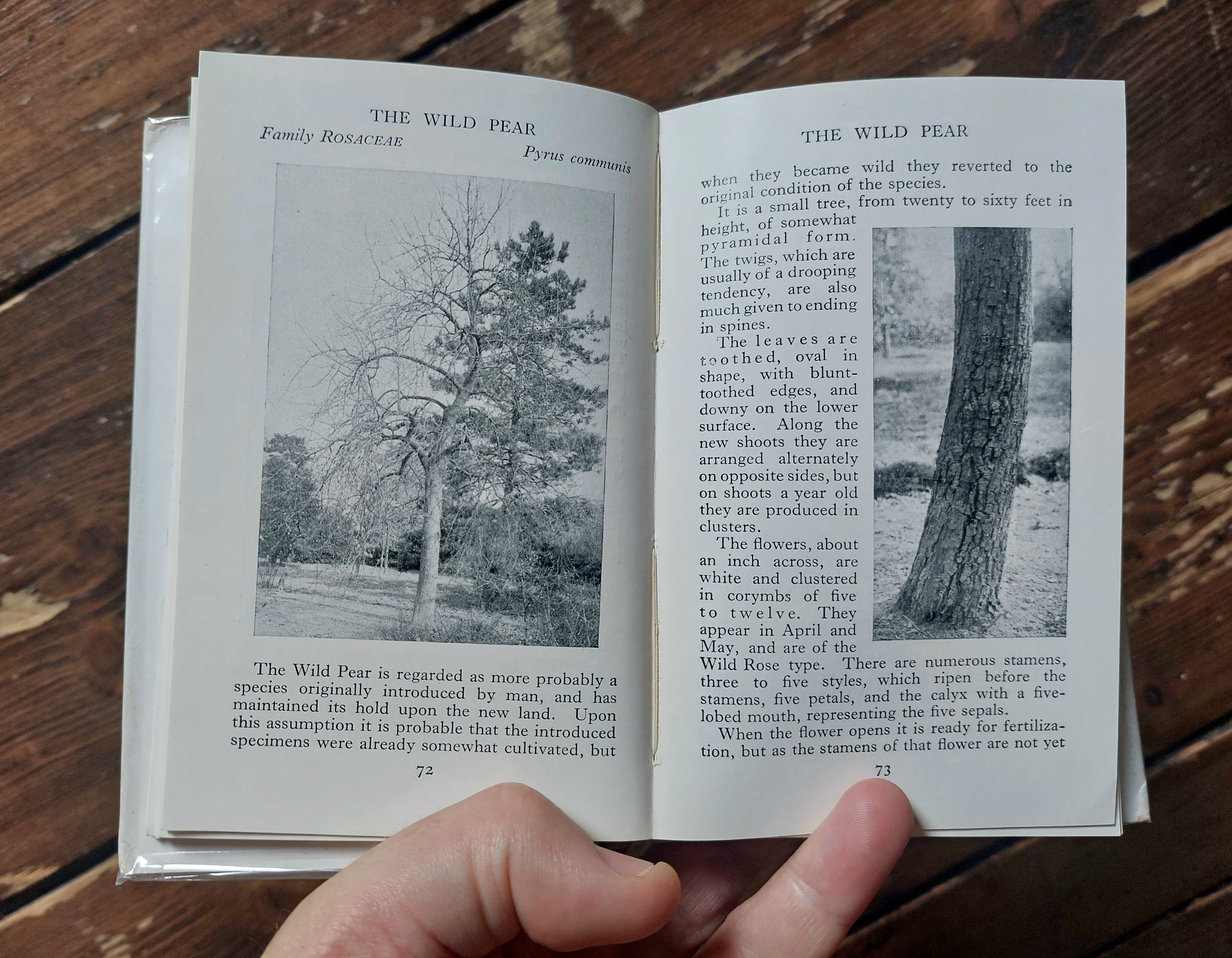
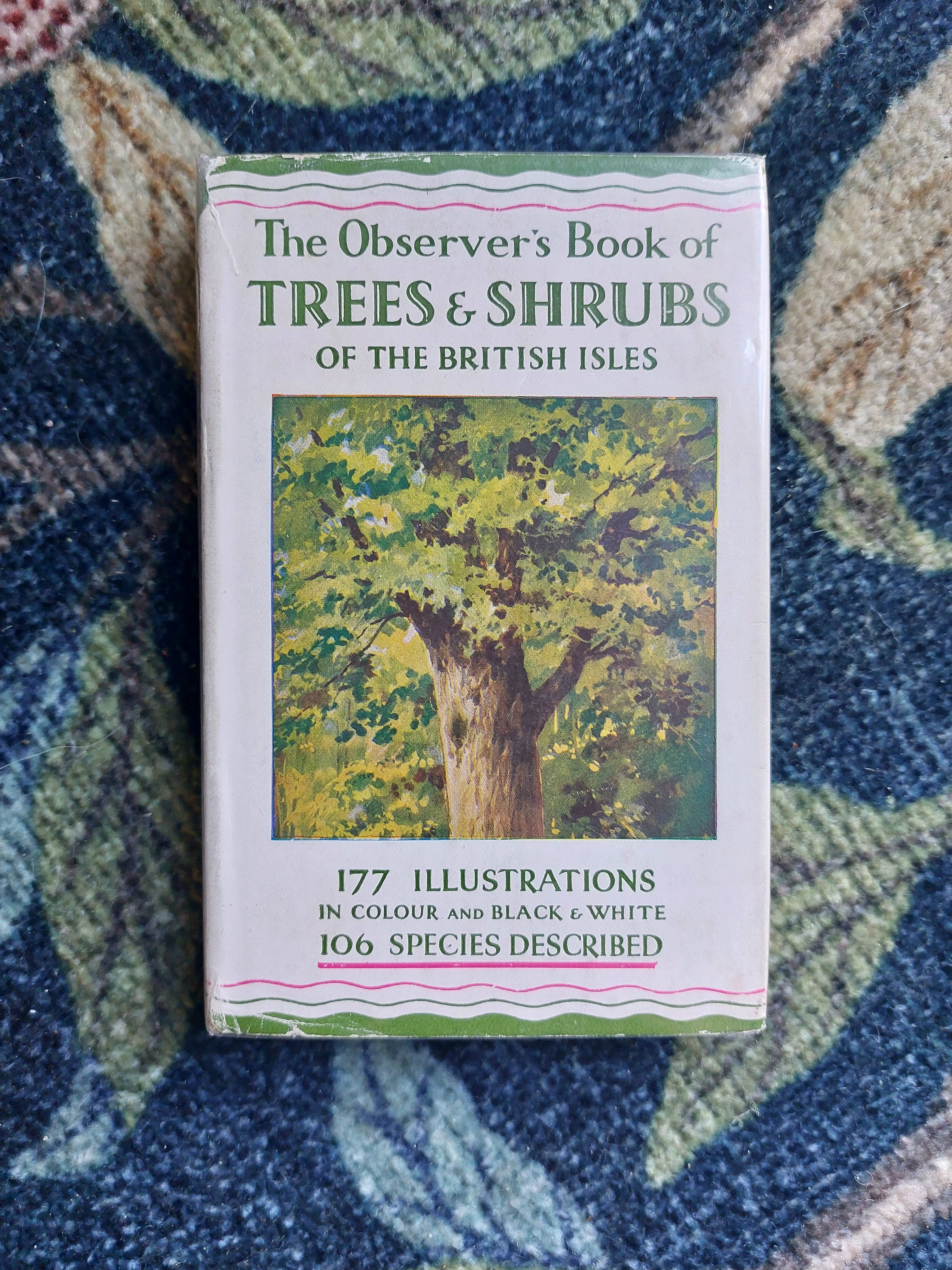
(I looked it up in my baby-Druid book:)
I was thinking of young Henry Wriothesley with his red-gold hair— a lucky colouring in Elizabethan times— but looking at the painting now, the youth has brown hair. And looking up the Hilliard miniatures of Wriothesley, his hair is also light brown, not red at all. I tell you all this only so you can see what I saw in my mind as I leant against the tree: red-gold hair, green leaves— were the roses in my mind’s-eye miniature red or white? We’re in Lancashire, so I’m going to say red. There was some Shakespeare in the mix too: Thou art more lovely & more temperate…
I’ve been calling places like this ‘time-holes’ for their deep-time density
Wikipedia says: ‘Chetham’s Hospital, which contains both the library and Chetham’s School of Music, was established in 1653 under the will of Humphrey Chetham (1580–1653), for the education of “the sons of honest, industrious and painful parents”, and a library for the use of scholars.’
Painful in this sense means hard-working, effortful, as in The Painful Plough:
I heard Culverake sing this song at Auckland Folk Festival. I had never heard it before, & it was so Kev— ridiculously Kevcoded— but he wasn’t in the room, he’d slipped out to organise a tent space for a friend. I was so agonised Kev had missed it that I asked Culverake if they could sing it again later in the Festival so he could hear it, which they duly did.
In the merry merry month of May I heard blue-eyed Nick Hart sing a variation on the same at Cecil Sharp House— though he sings the Faithful Plough, not the Painful Plough. If it was not for the ploughman, both rich & poor would rue, for they are all dependent upon the faithful plough… Never a truer word spoken!
(The Culverake version was different from either of these, but it doesn’t exist on the internet.)
Date the layers of soot like tree rings! Down in Sussex the other day Sean broke open a black fungus called King Alfred’s Cakes to show me the yearly growth rings inside. He told me it was good for carrying a little coal to quickly start your fire.
Stone potatoes
Dragon eggs
An arch with a point at the top— I looked up the exact shape, it’s called a Gothic arch
Heaney’s translation, which I’ve linked above, is better, but if you want to hear it in the Old Irish, here you go:
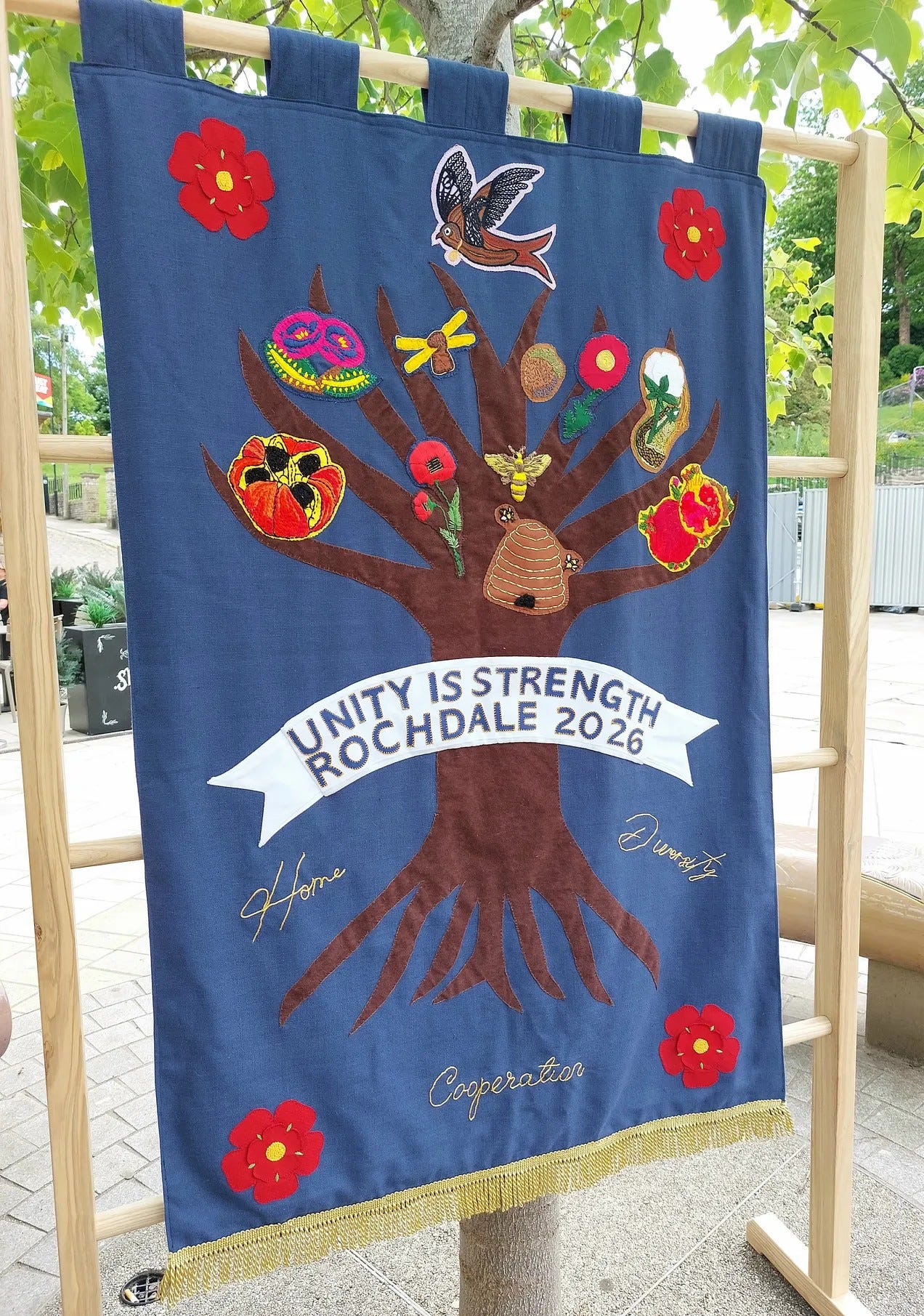
When Jennifer Reid & I went to the Cooperative Fair in Jenn’s home town of Rochdale, we saw the River Roch, recently uncovered for the first time since the Industrial Revolution.
The guide seems obsessed with Shakespeare. I think at first that this is a school-learned thing, but afterwards I guess that it’s a historical referent— Shakespeare’s time as a shorthand for the 1500s

At the very end of the tour I work out another possibility: that this silent secondary guide, as well as bringing up the rear to prevent straying & small robberies, is the more experienced guide, the Druid guide a newbie she’s supervising.
For some idea of what’s in the library: 101 Treasures of Chethams
Manchester is adorned all over with bees, the symbol of the city:
I believe that magic can turn on a dime. Also, I don’t think influence need be laborious; it can be exemplary rather than didactic. A single glancing interaction— even seeing a person in the street or getting hold of a book— can change a life’s path, can turn a child into an artist. That’s a good medicine to keep in your pocket for when art-making feels futile.
Let’s see if you dream about it…
See also: the idea that wildness must be unobserved by human eyes
That was a great essay ! I was there with you!
I cant belive no one can read the books! Can you ever ??
How does that work?
The "current of magic." Dreams and synchronicities have seemed few and far between of late for me, too, but this postcard brought it back for at least a little while.